


Introduction
Textile mills in India are the real engines behind every fabric you wear—but most people don’t even realise it. When people think about the textile industry in India, they usually imagine fashion brands or ready-made garments, not the factories where everything actually begins. Because of this, the role of textile manufacturers in India often goes unnoticed, even though they are responsible for turning raw fibres into usable fabric.
Now imagine a situation where these mills suddenly stop working. No yarn production, no fabric supply, and no finished garments in the market. Sounds serious, right? That’s because the entire textile supply chain depends heavily on textile mills in India. Without them, production slows down, prices increase, and even exports get affected.
In this blog post, you will discover how textile mills in India work as the backbone of the industry, their different types, and why they are essential for growth. As explained on textiletrendshub.com, India is rapidly becoming a global manufacturing hub, and these mills are at the centre of this transformation.
Textile Mills in India: What Are They?
Textile mills in India are industrial units where raw materials like cotton, wool, or synthetic fibres are processed into yarn and fabric. In simple terms, a textile factory in India is the place where the actual manufacturing of textiles happens—from cleaning fibres to spinning, weaving, and finishing fabrics. These mills are the starting point of the entire textile production process.
The main role of textile mills in India is to convert raw fibres into usable materials that can later be turned into garments, home textiles, and other products. This is different from textile manufacturing companies in India, which may focus more on branding, design, marketing, or selling finished goods. Mills, on the other hand, handle the core production work behind the scenes.
So, while companies bring products to the market, textile mills make sure those products can exist in the first place. Without mills, the textile supply chain would not function smoothly.
Types of Textile Mills
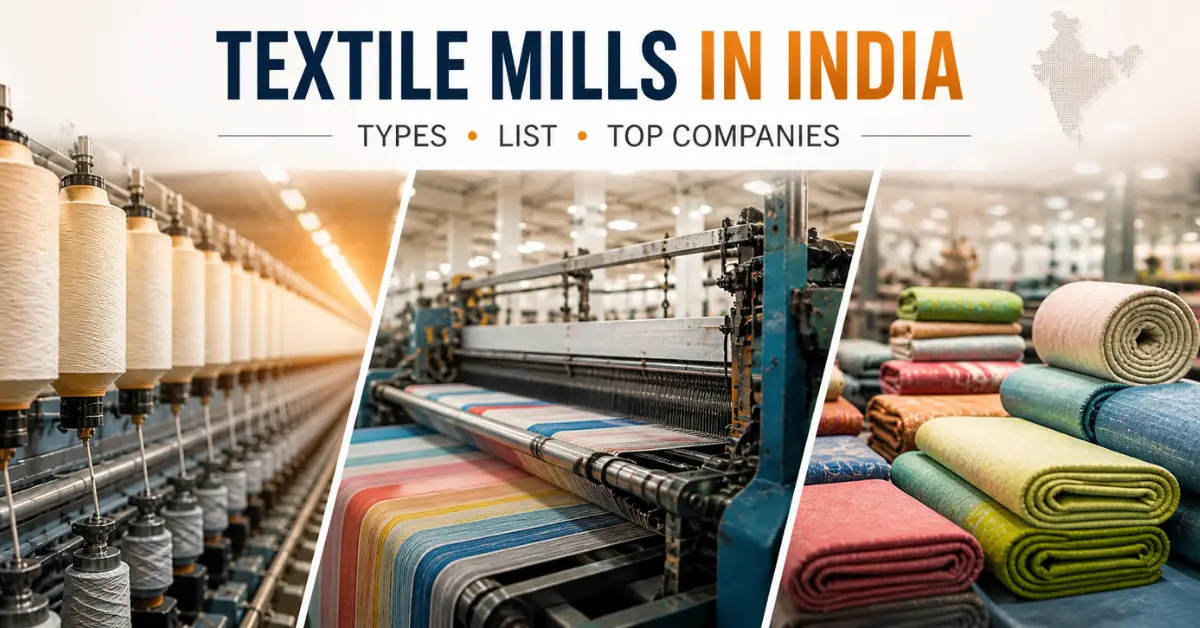
Understanding the different types of textile mills in India is important because each type plays a specific role in converting raw fibres into finished fabric. These mills work step by step, forming a complete production chain that supports the entire textile sector.
1. Spinning Mills
Spinning mills are the first stage of textile production. Here, raw cotton or other fibres are converted into yarn. Some of these mills are known as ‘cotton mills’ in India, especially when they mainly process cotton fibres. These mills are very important because yarn is the basic material required to make fabric. Without spinning mills, the textile process cannot even begin.
2. Weaving Mills
Weaving mills take the yarn produced by spinning mills and convert it into fabric using machines like looms. These mills are commonly referred to as ‘fabric mills’ in India because they produce different types of fabrics such as cotton, silk, and synthetic materials. This stage gives structure, strength, and design to the fabric.
3. Processing Mills
Processing mills focus on improving the appearance and quality of the fabric. This includes dyeing, printing, and finishing processes. These steps make the fabric ready for use in garments and other textile products. Many textile mills in India include processing units to ensure better quality and higher value in the final product.
Basically, cotton mills in India produce yarn, fabric mills in India create cloth, and processing mills enhance the final look and quality. Together, these textile mills in India form a complete and efficient textile production system.
Top Textile Mills in India: Leading Companies Driving Growth
When we talk about the best textile mills in India, a few well-established names always stand out because of their quality, scale, and innovation. These mills are not only important for domestic production but also play a major role in exports. If you are searching for the top textile mills in India, the following companies are considered industry leaders. (Note: The following are some of the most popular textile mills in India. This is not a ranking list but a simple overview of well-known mills in the industry.)
1. Arvind Limited
Arvind Limited is one of the most popular textile companies in India, especially known for denim manufacturing. It has a strong global presence and supplies fabrics to many international brands. The company focuses on innovation, sustainability, and high-quality fabric production.
2. Raymond Limited
Raymond is a trusted name among the textile mills in India, famous for its premium suiting fabrics. With decades of experience, Raymond has built a strong reputation for quality and design. It is also expanding into new textile segments to stay competitive.
3. Vardhman Textiles
Vardhman is a major player when discussing the top 10 textile mills in India. It is known for its large-scale yarn production and efficient manufacturing processes. The company has modern facilities and a strong export network.
4. Trident Group
Trident is one of the fastest-growing textile mills in India, especially in home textiles like towels and bed sheets. It is widely recognised for its sustainable practices and advanced production technology.
5. Welspun India
Welspun is one of the top 10 textile mills in India. The company specialises in home textiles and exports products to many countries. Its focus on innovation and branding makes it a strong global competitor.
These companies clearly show how textile mills are evolving with modern technology, global demand, and sustainable practices.
Top 20 Textile Mills in India
The textile mills in India listed below represent some of the most established and influential manufacturing units in the country’s textile ecosystem. These mills are deeply involved in yarn production, fabric development, and home textile processing, playing a critical role in strengthening the textile industry in India. Many of these entities are also recognised among the leading textile manufacturers in India, with a strong footprint in both domestic and global markets.
Let’s take a quick look at some of the most important mills:
| Mill Name | Location | Type of Mill | Specialisation |
| Arvind Limited | Gujarat | Composite | Denim, Cotton Fabric |
| Vardhman Textiles | Punjab | Spinning | Yarn, Fabric |
| Raymond Ltd | Multi-location | Composite | Suiting Fabric |
| Welspun Living Ltd | Gujarat | Home Textile | Towels, Bed Linen |
| Trident Group | Punjab | Composite | Yarn, Home Textiles |
| KPR Mill Ltd | Tamil Nadu | Integrated | Yarn, Garments |
| Alok Industries | Maharashtra | Integrated | Polyester, Apparel Fabric |
| Bombay Dyeing | Maharashtra | Composite | Home Textiles |
| Garden Silk Mills | Gujarat | Processing | Synthetic Fabric |
| Grasim Industries (Textiles) | Multi-location | Integrated | Viscose, Yarn |
| Sutlej Textiles | Punjab | Spinning | Blended Yarn |
| Century Textiles | Maharashtra | Composite | Cotton, Fabric |
| Nahar Spinning Mills | Punjab | Spinning | Cotton Yarn |
| RSWM Ltd | Rajasthan | Composite | Synthetic Yarn |
| Siyaram Silk Mills | Maharashtra | Fabric | Suiting & Shirting |
| Indo Count Industries | Maharashtra | Home Textile | Bed Linen Export |
| Himatsingka Seide | Karnataka | Integrated | Silk, Home Textile |
| Nitin Spinners | Rajasthan | Spinning | Cotton Yarn |
| Lakshmi Mills Company | Tamil Nadu | Composite | Yarn, Fabric |
| Mafatlal Industries | Gujarat | Processing | Fabric & Apparel |
Note: This is not a ranking list but a curated overview of some of the most well-known textile mills.
This curated list of the top 20 textile mills in India gives you a clear snapshot of the country’s diverse manufacturing landscape, covering spinning, weaving, and integrated production units. Each mill listed here operates in different segments, from cotton and synthetic yarn to home textiles and premium fabrics, reflecting the depth of the textile industry in India.
If you are looking for deeper insights, such as detailed company profiles, production capacity, or financial performance, you can explore individual company reports or industry analysis. Many of these mills are also part of the leading textile manufacturers in India, contributing significantly to both domestic supply and exports.
Textile Mill Hubs in India
India is home to some of the most powerful production regions, where textile mills in India are concentrated. These hubs are important because they provide strong infrastructure, skilled workers, and convenient access to raw materials. Together, they support the growth of the textile industry in India and help India compete in global markets.
- One of the biggest hubs is Gujarat. Cities like Ahmedabad and Surat are famous for cotton and synthetic fabric production. Many textile mills are located here because of easy access to raw cotton and well-developed transport facilities. Gujarat is also known for large-scale processing and export units.
- Maharashtra is another major region, especially cities like Mumbai, Ichalkaranji, and Solapur. This state has a long history in textiles and is home to several major textile industries in India. Mills here focus on spinning, weaving, and garment production, making it a complete textile ecosystem.
- Tamil Nadu is often called the “Textile Capital of India“. Cities like Coimbatore, Tiruppur, and Erode have thousands of mills, especially spinning units. This region plays a key role in yarn production and exports.
- Punjab is also an important hub, with cities like Ludhiana leading in woollen and hosiery products. These hubs clearly show how textile mills in India are spread across the country, each specialising in different segments of production.
Want to explore the biggest textile manufacturing cities and industry clusters across the country? Read our detailed guide on the textile hub of India to learn about major textile cities, market growth, and leading textile production centres in India.
Top Textile Companies & Stocks
When we talk about the growth of textile mills in India, it is also important to understand the role of leading companies and stocks that drive the market. Many users search for ‘top textile companies in India’, ‘top 50 textile companies in India’, or even ‘top 100 textile companies in India’ to get an idea of the biggest players in this sector. These companies not only operate mills but also manage large-scale production, exports, and branding.
Some well-known names often appear in lists like the top 10 textile manufacturing companies in India and the top 20 textile companies in India, including Arvind Limited, Vardhman Textiles, Raymond, Trident Group, and Welspun India. These are also considered among the most trusted textile companies in India because of their strong market presence and consistent performance.
From an investment point of view, people also look for the top 10 textile stocks in India and the top 20 textile stocks in India. These stocks reflect how well the textile sector is performing in the stock market. However, this section is just a brief overview to help you understand the connection between mills, companies, and stocks.
To explore the complete structure and growth of the sector, read our detailed guide on the top textile industry in India.
Challenges Faced by Textile Mills
Despite strong growth, textile mills in India face several practical challenges that affect production and profitability. One major issue is the rising cost of raw materials like cotton and energy, which increases overall manufacturing expenses. Many small and medium units also struggle to upgrade technology in every textile factory in India, making it difficult to compete with modern, automated mills.
Another challenge is environmental pressure, as strict regulations require mills to manage water usage and waste properly. In addition, global competition from countries with lower production costs creates pricing pressure. To stay competitive, mills must focus on efficiency, sustainability, and continuous improvement in operations.
Future of Textile Mills in India
The future of textile mills in India looks very promising as technology and innovation continue to grow. Many mills are now adopting automation, smart machines, and digital systems to improve efficiency and reduce costs. This shift is helping textile manufacturing companies in India produce better quality fabrics in less time. At the same time, there is a strong focus on sustainability, with eco-friendly processes and energy-saving methods becoming more common. Government support and rising global demand are also creating new opportunities. Overall, textile mills are moving towards a more advanced, competitive, and environmentally responsible future.
Conclusion
In simple terms, textile mills in India are the backbone of fabric production and play a key role in the country’s growth. From turning raw fibres into yarn to creating finished fabrics, these mills support the entire textile supply chain. The efforts of textile manufacturers in India ensure consistent quality, large-scale production, and global competitiveness. As technology improves and demand increases, these mills will continue to evolve and create new opportunities. Understanding their role helps you see the bigger picture of how the textile sector works and why it remains one of India’s strongest industries.
Want to understand the complete picture beyond the mills? Check out our complete guide on the textile industry in India to understand its growth, structure, and future trends.

Q1. What are textile mills in India, and why are they important?
Textile mills in India are industrial units where raw fibres are converted into yarn and fabric. These mills are important because they act as the starting point of the textile supply chain. Without them, there would be no fabric production, which means no garments or textile products in the market.
Q2. What is the role of textile mills in the production process?
Textile mills play a key role by processing raw materials into usable textiles. They handle steps like spinning, weaving, and finishing, which are essential before any product reaches the market. Basically, they turn raw fibre into finished fabric.
Q3. What are the different types of textile mills?
There are mainly three types of textile mills:
1. Spinning mills – convert fibre into yarn
2. Weaving mills – convert yarn into fabric
3. Processing mills – improve fabric quality through dyeing and finishing
Each type works together to create a complete textile production system.
Q4. Which are the top textile mills in India?
Some of the most popular textile mills include Arvind Limited, Raymond Limited, Vardhman Textiles, Trident Group, and Welspun India. These companies are known for their large-scale production, quality standards, and global presence.
Q5. How do textile mills support the textile industry in India?
Textile mills in India support the industry by ensuring a continuous supply of yarn and fabric. They form the foundation of the textile ecosystem, helping manufacturers produce garments and other products efficiently. Without mills, the entire industry would struggle to function.
Q6. Where are the major textile mill hubs located in India?
Major textile mill hubs are located in Gujarat, Maharashtra, Tamil Nadu, and Punjab. These regions offer easy access to raw materials, skilled labour, and strong infrastructure, making them ideal for textile production.
Q7. What challenges do textile mills face in India?
Textile mills face challenges like rising raw material costs, outdated technology, and environmental regulations. In addition, global competition from other countries puts pressure on pricing and efficiency.
Q8. What is the difference between textile mills and textile companies?
Textile mills focus on manufacturing and production, while textile companies often handle branding, marketing, and sales. In short, mills create the product, and companies bring it to the market.
Q9. What is the future of textile mills in India?
The future looks promising as mills are adopting automation, smart technology, and eco-friendly practices. This helps improve efficiency, quality, and sustainability, making them more competitive in global markets.
Q10. Why are textile mills in India important for economic growth?
Textile mills contribute to economic growth by creating jobs, supporting exports, and boosting manufacturing output. They play a major role in strengthening the overall textile sector and maintaining India’s position in the global market.


