


Introduction
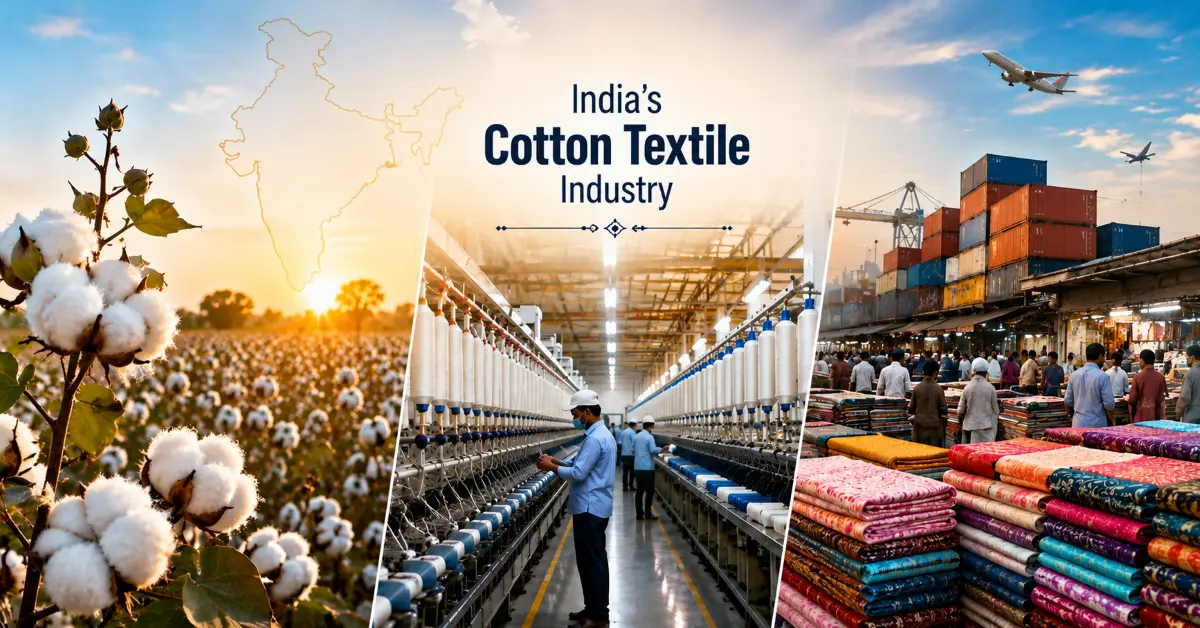
The cotton textile industry in India is not just a part of the economy—it is one of the biggest reasons why India is known worldwide in the textile market. From everyday cotton clothes to large export businesses, the cotton industry supports millions of people across the country. Farmers, textile workers, spinning mills, garment manufacturers, and exporters all depend on this industry for income and growth. Even today, cotton remains the backbone of the Indian textile sector because it is comfortable, breathable, and widely preferred in daily wear.
India is one of the largest producers of cotton in the world, which gives the country a strong advantage in cotton manufacturing and textile production. The easy availability of the main raw material for cotton textile industry helps India produce different varieties of yarn, fabrics, and garments for both domestic and international markets. With growing demand for sustainable fashion and increasing global awareness about cotton fabric, the Indian textile sector continues to expand rapidly through modern technology, exports, and industrial development.
In this detailed guide, textiletrendshub.com will explain everything about the cotton textile industry in India, including its history, production process, major textile states, spinning mills, exports, challenges, sustainability trends, and future opportunities. Whether you are a student, beginner, researcher, or textile enthusiast, this blog post will help you easily understand how the Indian cotton industry plays a major role in the country’s economy and global textile trade.
India’s strong textile ecosystem is also supported by several major textile cities and industrial clusters. To learn more about these manufacturing and trading hubs, read our detailed guide on “Textile Hub of India: Major Textile Cities, Industry Clusters & Market Growth“.
History of Cotton Textile Industry in India
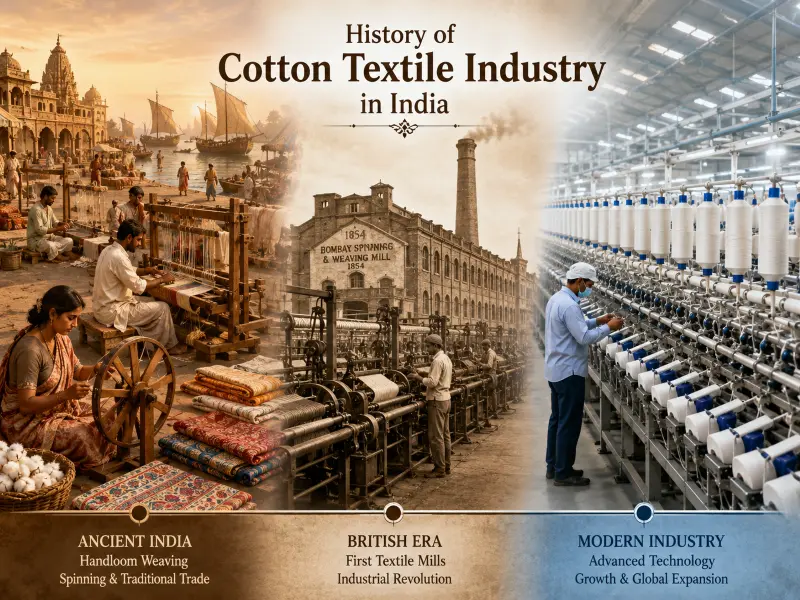
The cotton textile industry in India has a very long and rich history. India was one of the first countries in the world to grow cotton and make cotton fabrics. Ancient Indian cotton cloth was famous for its softness, quality, and beautiful designs. Traders from different countries visited India to buy cotton fabrics, which helped the cotton industry in India grow strongly over time. Because of this strong foundation, the cotton textile industry in India became an important part of the country’s economy and culture.
1. Ancient Cotton Trade in India
The history of the Indian cotton textile sector goes back thousands of years to the Indus Valley civilisation. Archaeologists found evidence showing that people in ancient India knew how to spin cotton and weave cloth. Indian cotton fabrics were exported to countries like Egypt, Rome, and China through sea and land trade routes.
During ancient and medieval times, Indian cotton products such as muslin, calico, and printed fabrics became highly popular around the world. Many kings and rulers supported textile production because it created jobs and increased trade. This early success helped the cotton textile industry in India become globally recognised long before modern factories were introduced.
2. British Era and First Textile Mills
The British period played a major role in changing the Indian textile sector. During the 18th and 19th centuries, British industries started importing raw cotton from India for factories in England. At the same time, machine-made foreign cloth entered Indian markets, which negatively affected local weavers and small textile businesses.
However, modern textile manufacturing also started during this period. In 1854, the first successful cotton textile mill was established in Mumbai, which later became an important textile centre in the country. After this, many more cotton textile mills were built in cities like Ahmedabad, Kanpur, and Coimbatore. These mills introduced modern machinery and increased large-scale production in the cotton industry in India.
The Swadeshi movement also encouraged people to use Indian-made products instead of foreign goods. This movement supported local textile businesses and helped the cotton textile industry in India grow further.
3. Post-Independence Growth
After India gained independence in 1947, the government focused on expanding the textile sector to support employment and industrial growth. New policies, industrial projects, and textile mills were introduced across different states. The government also supported the handloom and powerloom sectors to improve production capacity.
During this period, the cotton textile industry class 10 syllabus often highlighted how the industry became one of the largest employment-generating sectors in India after agriculture. Textile production increased rapidly because of better transport, electricity, and industrial infrastructure.
Cities like Mumbai, Ahmedabad, Surat, and Coimbatore developed into major textile hubs. The industry also started producing a wider variety of fabrics and garments for domestic and international markets.
4. Modernisation of the Cotton Industry
Today, the cotton textile industry in India has become highly modern and technology-driven. Advanced spinning machines, automated weaving systems, and digital textile processing methods have improved productivity and fabric quality. Modern factories now focus on faster production, export growth, and sustainable manufacturing practices.
The evolution of cotton textile mills has also helped India become one of the leading textile producers in the world. Along with traditional fabrics, companies now manufacture technical textiles, organic cotton products, and eco-friendly garments to meet changing global demand.
With continuous innovation, strong raw material availability, and skilled workers, the Indian cotton textile sector continues to grow and maintain its importance in the global textile market.
To explore the complete historical journey of the Indian textile sector in detail, including ancient cotton trade, British-era textile mills, the Swadeshi movement, and modern industrial growth, read our detailed guide on the “History of Cotton Textile Industry in India: Complete Guide“.
Overview of the Cotton Textile Industry in India
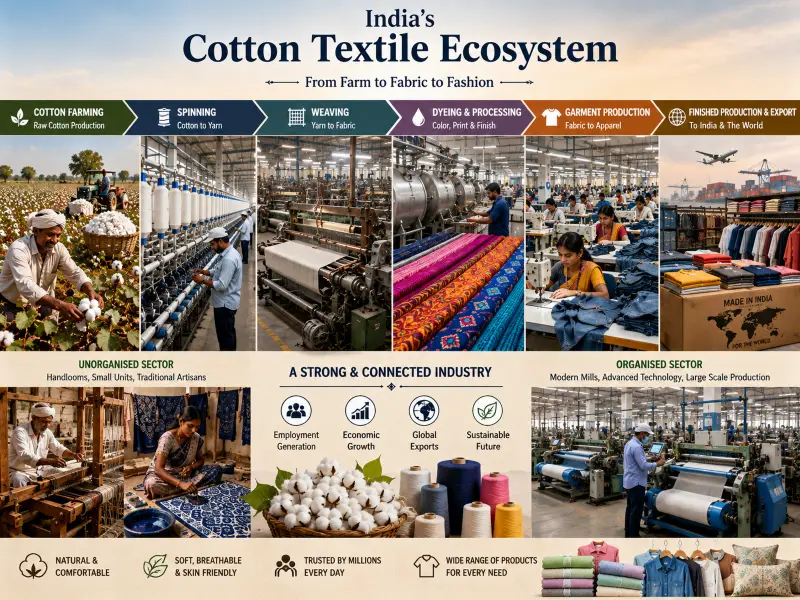
With a strong manufacturing base and large cotton production, the cotton textile industry in India has become a key part of the Indian economy. It plays a major role in employment generation, exports, and industrial growth. The industry includes many activities such as spinning, weaving, dyeing, processing, and garment production. Because of the easy availability of cotton and skilled workers, the cotton industry has developed strongly across different parts of the country. Today, the cotton textile industry in India supplies fabrics and garments not only to Indian consumers but also to many international markets.
The structure of the cotton textile industry in India is very wide and well-connected. It starts with farmers who grow cotton, which is the main raw material for the cotton textile industry. After harvesting, cotton is sent to factories and mills where it is cleaned and converted into yarn through the spinning process. This yarn is then used in weaving units to produce fabrics. Later, the fabric goes through dyeing, printing, and finishing processes before being used in clothing and other textile products. Finally, garment manufacturing companies convert these fabrics into shirts, jeans, bedsheets, towels, and many other products used in daily life.
The cotton textile industry in India is divided into two major sectors: the organised sector and the unorganised sector.
- The organised sector includes large factories, modern cotton textile mills, export houses, and branded garment manufacturers that use advanced technology and machinery. These industries follow quality standards and produce textiles on a large scale.
- On the other hand, the unorganised sector includes handloom workers, small weaving units, local dyeing businesses, and traditional textile artisans. Both sectors together contribute greatly to the growth of the cotton industry in India and provide jobs to millions of people.
The cotton manufacturing process involves several important stages that help transform raw cotton into finished textile products. The first stage is spinning, where cotton fibres are converted into yarn. The next stage is weaving or knitting, where yarn is turned into fabric. After this, the fabric goes through dyeing and finishing processes to improve its colour, texture, and quality. Finally, garment manufacturing companies stitch the fabric into different clothing items and textile products. Modern technology and automation have made the cotton manufacturing process faster and more efficient in recent years.
Another important reason behind the success of the cotton textile industry in India is the growing demand for cotton fabric in daily life. Cotton fabrics are soft, breathable, lightweight, and comfortable, which makes them highly popular among consumers. Many people prefer cotton clothes because they are suitable for hot weather and comfortable for regular use. This increasing demand has also improved public information about cotton fabric, including its benefits, uses, and sustainability. According to textiletrendshub.com, the popularity of cotton products continues to grow because consumers now prefer natural and eco-friendly fabrics over synthetic materials.
Today, the cotton textile industry in India continues to expand through modern infrastructure, technological innovation, and rising global demand. Large textile hubs, advanced spinning mills, and export-oriented manufacturing units are helping India strengthen its position in the international textile market. With strong support from both the organised and unorganised sectors, the Indian cotton industry remains one of the most valuable parts of the country’s textile economy.
Cotton Production and Raw Materials
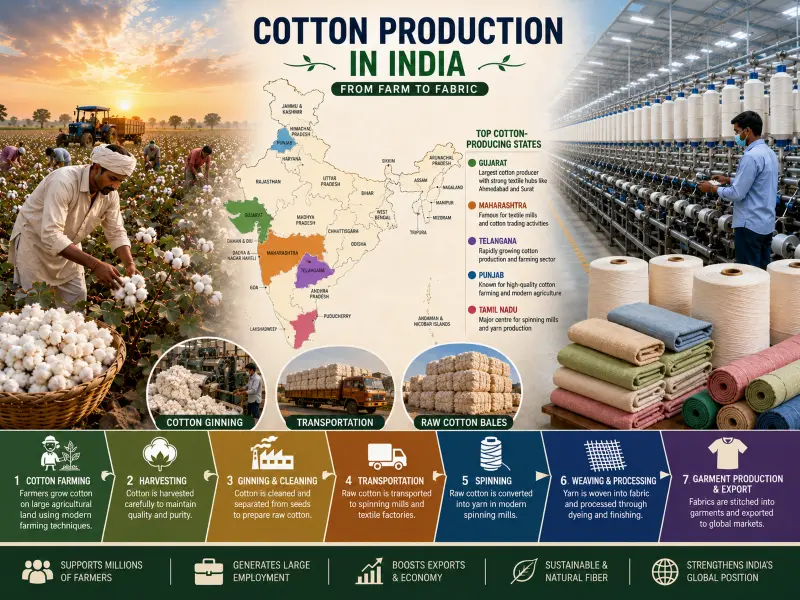
India’s large-scale cotton production plays a vital role in the growth of the cotton textile industry in India. The country is among the leading cotton producers in the world and has become an important contributor to the global cotton industry. The country has favourable climatic conditions, a large farming network, and strong agricultural support, which help improve cotton production every year. Because cotton is the main raw material for the cotton textile industry, the growth of cotton farming directly affects textile manufacturing, spinning mills, and fabric production in India.
India’s large-scale cotton farming provides strong support to the growing cotton industry in India. Millions of farmers cultivate cotton on agricultural land spread across several states. This large production capacity helps India meet both domestic and international demand for cotton yarn, fabrics, and garments. The availability of quality cotton also strengthens cotton manufacturing activities across spinning, weaving, dyeing, and garment sectors. Due to this strong supply chain, the cotton textile industry in India continues to remain one of the most important industries in the country.
Several Indian states contribute significantly to cotton production. Gujarat is the leading cotton-producing state and is considered a major centre of the cotton textile industry in India. Cities like Ahmedabad and Surat have developed strong textile ecosystems because of easy access to raw cotton and modern textile infrastructure. Maharashtra is another important cotton-producing state with a long history of textile mills and cotton trading. Telangana has also increased its cotton production rapidly in recent years, while Andhra Pradesh and Rajasthan continue to strengthen India’s cotton supply through expanding cultivation and improved farming practices. Together, these states provide continuous support to the Indian cotton textile sector and help textile mills operate efficiently.
Top Cotton-Producing States Supporting the Cotton Textile Industry in India:
| State | Major Contribution to the Textile Industry |
| Gujarat | Largest cotton producer with strong textile hubs like Ahmedabad and Surat |
| Maharashtra | Famous for textile mills and cotton trading activities |
| Telangana | Rapidly growing cotton production and farming sector |
| Andhra Pradesh | Important contributor to the southern cotton belt |
| Rajasthan | Expanding cotton cultivation supported by irrigation facilities |
Farmers play a major role in strengthening the cotton textile industry in India. Without cotton cultivation, textile factories and spinning mills would face shortages of raw materials. Farmers work throughout the year to grow and supply cotton to ginning factories and textile manufacturers. Their contribution supports employment generation, exports, and industrial growth across the country. The success of the cotton industry in India is closely connected to the productivity and stability of cotton farming communities.
Modern agricultural practices have also improved cotton production in recent years. The introduction of BT cotton has helped farmers increase crop yields and reduce damage caused by insects and pests. BT cotton seeds are widely used in many cotton-growing states because they improve productivity and support efficient farming. Along with this, better irrigation systems, farming equipment, and government agricultural schemes are helping the cotton textile industry in India grow more effectively. These developments have strengthened the supply of the main raw material for the cotton textile industry and supported the expansion of modern cotton manufacturing in India.
Today, India continues to maintain a strong position in the global cotton textile market because of its large cotton production capacity and strong farming ecosystem. As technology, sustainability, and agricultural practices continue to improve, the future of the cotton textile industry in India looks promising for farmers, manufacturers, exporters, and textile businesses alike.
To learn more about India’s leading cotton-producing states, production statistics, global ranking, exports, and farming challenges, read our detailed guide on cotton production in India.
Major Cotton Textile Industry in India: Leading States and Industrial Hubs
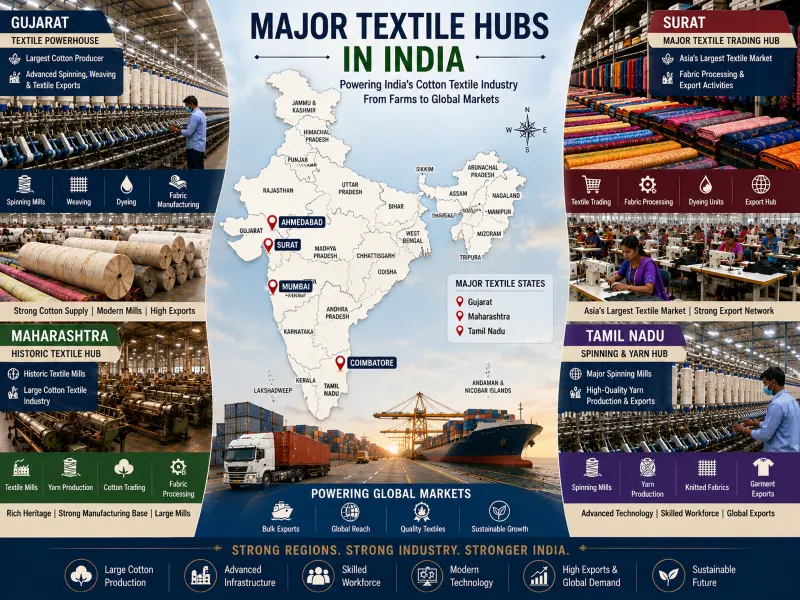
Across several major states and industrial cities, the cotton textile industry in India plays a key role in textile production, spinning, weaving, and exports. Different regions of the country contribute in different ways to the growth of the major cotton textile industry in India. Some areas are famous for cotton farming, while others are known for fabric manufacturing, garment production, and textile exports. These industrial clusters help India maintain its strong position in the global textile market.
Many students and researchers also search for the ‘cotton textile industry in India map’ to understand where the biggest textile hubs are located. Gujarat, Maharashtra, and Tamil Nadu are among the leading states that support the growth of the cotton textile industry in India through modern factories, skilled workers, and strong transportation networks. These states have developed large cotton textile mills, spinning centres, and export hubs that contribute significantly to India’s economy.
India’s textile sector is supported by a strong network of industrial cities and manufacturing clusters. The list of cotton textile industry in India includes famous textile cities such as Ahmedabad, Surat, Mumbai, and Coimbatore. These cities are known for their advanced textile infrastructure, yarn production, fabric processing, and large-scale textile trading activities.
Major Cotton Textile States and Industrial Hubs in India:
| State | Key Contribution to the Cotton Textile Industry |
| Gujarat | Cotton production, spinning, weaving, and textile exports |
| Maharashtra | Historic textile manufacturing and large cotton textile mills |
| Tamil Nadu | Major spinning mills, yarn production, and textile exports |
| Ahmedabad | Cotton manufacturing and large-scale textile mill operations |
| Surat | Textile trading, fabric processing, and export activities |
1. Gujarat: Textile Powerhouse
Gujarat is considered one of the strongest contributors to the cotton textile industry in India. The state is one of the largest cotton producers in the country and has a well-developed textile ecosystem. Cities like Ahmedabad and Surat have thousands of textile units involved in spinning, weaving, dyeing, and garment manufacturing. Gujarat’s strong cotton supply and industrial development make it an important centre for the major cotton textile industry in India.
The state is also home to many modern cotton textile mills and spinning centres that produce high-quality yarn and fabrics for both domestic and international markets. Gujarat’s ports and transport facilities help textile businesses export products easily to different countries. Because of this, Gujarat has become a major export hub in the Indian textile sector.
2. Maharashtra: Historic Textile Manufacturing Hub
Maharashtra also plays an important role in the growth of the cotton textile industry in India. Mumbai was one of the earliest textile manufacturing centres in the country and helped shape the modern Indian textile sector. During the early industrial period, many textile mills were established in Mumbai because of easy transportation, labour availability, and access to ports.
Even today, Maharashtra remains an important state for the major cotton textile industry in India due to its spinning units, garment factories, and textile processing industries. The state has many large cotton textile mills that support yarn and fabric production. Cities like Nagpur, Solapur, and Ichalkaranji also contribute to textile manufacturing and industrial growth.
3. Tamil Nadu: Major Spinning and Yarn Hub
Tamil Nadu is another leading state in the cotton textile industry in India and is especially famous for spinning and yarn production. Coimbatore is often called the “Manchester of South India” because of its large number of spinning mills and textile factories. The city has become one of the biggest spinning centres in Asia and supports the growth of the major cotton textile industry in India.
Tamil Nadu has advanced textile machinery, skilled workers, and a strong industrial network. The state produces cotton yarn, knitted fabrics, garments, and textile products for both Indian and global markets. Many export-oriented textile businesses operate in Coimbatore, Tiruppur, and nearby industrial clusters.
4. Ahmedabad: Manchester of India
Ahmedabad is one of the most famous textile cities connected to the cotton textile industry in India. The city earned the title “Manchester of India” because of its large textile production and strong cotton manufacturing base. Ahmedabad has a long history of textile mills and continues to remain an important industrial centre for cotton fabrics and yarn production.
The city has many large cotton textile mills, weaving units, and processing factories. Its strong industrial infrastructure and availability of raw cotton have helped Ahmedabad become a major textile hub. Today, Ahmedabad continues to attract textile investments and plays a major role in the cotton textile industry in India.
5. Surat: Major Textile Trading Hub
Surat is one of the largest textile markets in the country and an important part of the cotton textile industry in India. Although Surat is widely known for synthetic fabrics, the city also contributes to cotton fabric processing, textile trading, and garment manufacturing. Surat has thousands of weaving units, dyeing factories, and textile businesses that support India’s textile exports.
The city is considered one of the biggest textile trading centres in Asia and has developed strong industrial clusters over the years. Surat’s textile market connects manufacturers, wholesalers, exporters, and retailers from different parts of the country. Its modern infrastructure and large textile network make it an important export hub for the major cotton textile industry in India.
Overall, the success of the cotton textile industry in India depends heavily on these leading states, industrial clusters, spinning centres, and export hubs. Their contribution to cotton production, yarn manufacturing, textile processing, and exports continues to strengthen India’s position in the global textile market.
Spinning Mills and Cotton Manufacturing Infrastructure
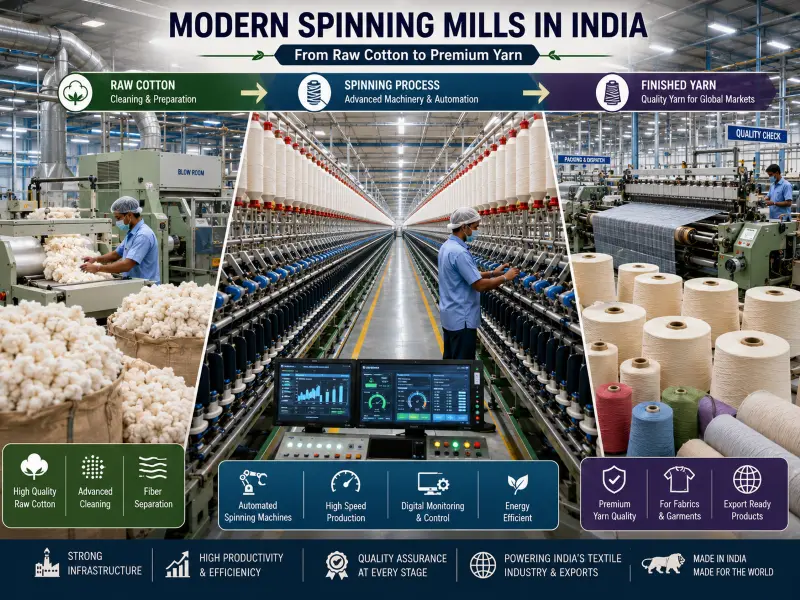
The success of the cotton textile industry in India is closely connected to advanced spinning mills and textile manufacturing infrastructure. Spinning mills play an important role in converting raw cotton into yarn, which is later used for weaving fabrics and making garments. Without efficient spinning units, the growth of the cotton industry would not be possible. Today, India has thousands of spinning mills that support domestic textile production as well as global yarn exports.
1. Role of Spinning Mills in India
Spinning mills are the foundation of the textile manufacturing process. These mills clean raw cotton, separate fibres, and convert them into yarn through advanced machinery. The yarn produced in these units is supplied to weaving factories, garment manufacturers, and export companies. Many large cotton textile mills in India operate with high production capacity to meet the increasing demand for cotton fabrics in both local and international markets.
The country is also known for having some of the top 10 spinning mills in India, which use modern technology and automated systems to improve production quality. States like Tamil Nadu, Gujarat, and Maharashtra are major centres for spinning activities because of their strong textile infrastructure and easy availability of cotton.
2. Yarn Manufacturing Process
The yarn manufacturing process begins with cleaning and processing raw cotton fibres. After cleaning, the fibres move through different stages such as carding, combing, drawing, and spinning. These steps help create smooth and strong yarn suitable for textile production. Modern cotton manufacturing units use advanced machines to increase speed, reduce waste, and improve yarn quality.
The cotton textile industry in India has invested heavily in automation and advanced textile machinery over the last few years. Automated spinning systems help reduce labour costs and improve production efficiency. This modernisation has also increased India’s yarn export capacity and strengthened its position in the global textile market.
3. Modern Textile Machinery and Leading Mills
Today, many spinning mills use smart textile machinery equipped with digital monitoring systems and energy-efficient technology. These machines help manufacturers maintain consistent yarn quality while reducing production errors. Automation has become an important part of the modern cotton industry, especially in large textile clusters.
Several leading cotton textile mills and spinning companies contribute significantly to India’s textile growth. These mills support employment generation, export earnings, and industrial development across the country. With continuous modernisation, strong yarn exports, and improved manufacturing systems, the cotton textile industry in India continues to strengthen its global competitiveness in textile production.
For a deeper understanding of yarn manufacturing, major spinning states, leading companies, and technological advancements, read our comprehensive guide on “Spinning Mills in India: Process, Leading Companies, Technology, and Export Growth“.
Export Market and Global Trade
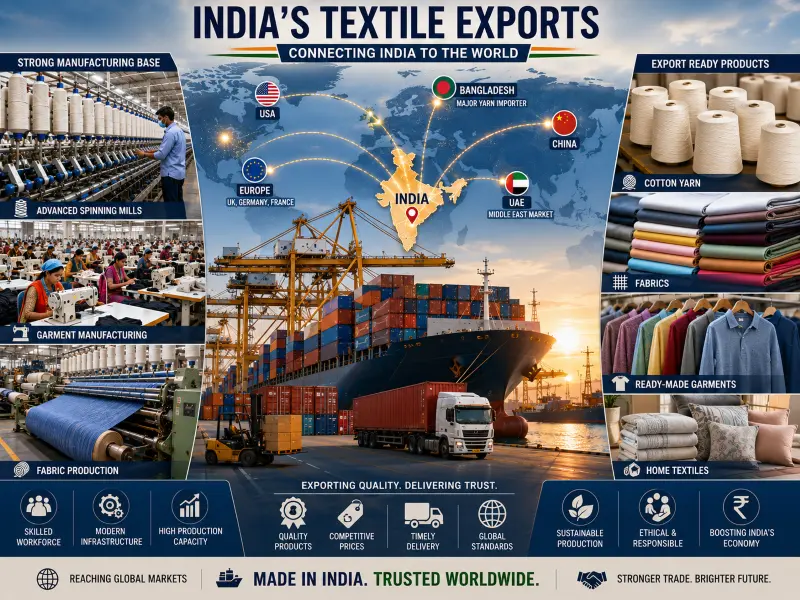
India is one of the world’s leading producers and exporters of cotton yarn, fabrics, garments, and other textile products. The cotton textile industry in India plays a major role in strengthening the country’s export economy and global textile trade. With strong production capacity, skilled labour, and advanced cotton manufacturing infrastructure, India supplies high-quality textile products to many international markets. The export sector not only increases industrial growth but also helps the country earn valuable foreign exchange.
Today, the cotton industry in India exports a wide range of products, including cotton yarn, grey fabrics, finished garments, home textiles, and other cotton textile products. Indian textile exporters are known for offering quality products at competitive prices, which makes India an important player in the global textile market. The availability of skilled workers, modern spinning mills, and strong textile hubs also supports export growth across the country.
The United States, Bangladesh, China, the United Kingdom, Germany, and the United Arab Emirates are some of the major destinations for Indian cotton textile exports. Among these, Bangladesh imports large quantities of Indian cotton yarn for garment manufacturing. Indian textile products are also popular in European countries because of their quality, durability, and growing focus on sustainable production methods.
Cotton yarn exports are one of the strongest segments of the cotton textile industry in India. Many Indian spinning mills export yarn to countries that use it for fabric and apparel manufacturing. Along with yarn, ready-made garments and home furnishing products also contribute significantly to export revenue. This strong export performance supports employment generation and improves India’s foreign exchange earnings every year.
However, the global textile market is highly competitive. Countries like China, Bangladesh, and Vietnam create strong competition for the Indian textile sector. China has advanced manufacturing technology and large-scale production capacity, while Bangladesh is known for low-cost garment manufacturing. To remain competitive, the cotton textile industry in India is focusing on modernisation, sustainable production, better quality standards, and faster supply chain management.
With increasing global demand for eco-friendly fabrics and high-quality textile products, the future of India’s export sector looks promising. Continued investment in technology, infrastructure, and skilled labour can help the Indian cotton textile sector strengthen its position in the international market in the coming years.
Major Problems of Cotton Textile Industry
Despite its huge contribution to the economy, the cotton textile industry in India faces several challenges that affect production, profits, and global competitiveness. The growth of the cotton industry depends not only on production and exports but also on how effectively these problems are managed. Many textile manufacturers and mill owners are trying to modernise their operations, but certain issues still slow down the development of the cotton textile industry.
Major Problems of Cotton Textile Industry in India:
| Major Problem | Impact on the Industry |
| Rising Raw Material Costs | Increases yarn and fabric production costs |
| Outdated Machinery and Technology | Reduces manufacturing efficiency and fabric quality |
| Environmental Concerns | Creates pollution and sustainability challenges |
| Labour and Infrastructure Issues | Affects production speed and industrial growth |
| Global Competition | Increases pressure from low-cost textile-producing countries |
1. Rising Raw Material Costs
One of the major problems of the cotton textile industry is the continuous rise in cotton prices. Cotton is the main raw material for the cotton textile industry, and price fluctuations directly affect yarn and fabric production costs. When cotton prices increase suddenly due to poor weather, lower crop production, or global market changes, textile companies face financial pressure. Small and medium textile units are affected the most because higher raw material costs reduce their profit margins and increase product prices.
2. Outdated Machinery and Technology
Many old textile mills in India still use outdated machines and traditional production methods. This reduces manufacturing speed and fabric quality compared to countries using advanced textile technology. Modern textile machinery improves productivity, saves energy, and reduces waste, but upgrading machines requires large investments. Because of this, several small manufacturers in the cotton textile industry in India struggle to compete with international textile producers.
3. Environmental Concerns
Pollution is another serious challenge in the cotton textile industry. Textile dyeing and processing units use large amounts of water and chemicals, which can harm the environment if not treated properly. In addition, excessive water usage and chemical waste create environmental concerns in many textile hubs. Today, consumers are becoming more aware of sustainable fashion, so textile companies are under pressure to adopt eco-friendly production methods and reduce pollution.
4. Labour and Infrastructure Issues
The cotton industry also faces labour shortages and infrastructure problems in some regions. Skilled workers are very important for spinning, weaving, dyeing, and garment manufacturing, but many textile companies struggle to find trained labour. Poor transportation systems, electricity shortages, and high logistics costs also affect production efficiency. These infrastructure challenges slow down the overall growth of the cotton textile industry in India.
5. Global Competition
India faces strong competition from countries like China, Bangladesh, and Vietnam in the global textile market. These countries often produce textile products at lower costs and export them quickly to international buyers. To remain competitive, the cotton textile industry must focus on modernisation, better quality, sustainable manufacturing, and faster production systems. Solving these challenges is important for the future growth and global success of the Indian textile sector.
Sustainability, Innovation, and Market Trends
India’s textile sector is changing rapidly as companies focus more on sustainability, modern technology, and eco-friendly production methods. The cotton textile industry in India is adopting innovative practices to meet growing global demand for sustainable fabrics and high-quality textile products. Today, customers around the world are becoming more conscious about the clothes they wear and how those clothes are manufactured. Because of this growing awareness, many businesses in the Indian cotton textile sector are adopting cleaner and smarter production practices. These changes are helping the industry reduce pollution, save natural resources, and improve product quality at the same time.
1. Organic Cotton Production
One of the biggest trends in the Indian textile sector is the rise of organic cotton farming. Organic cotton is grown without harmful chemicals and pesticides, making it safer for farmers, consumers, and the environment. Many textile companies are now using organic cotton in cotton manufacturing to meet the increasing demand for sustainable fashion products. India is also one of the leading producers of organic cotton in the world, which gives the cotton textile industry in India a strong advantage in global markets.
2. Sustainable Textile Manufacturing
Modern textile companies are now focusing on sustainable production methods to reduce environmental damage. Factories are using energy-efficient machines, reducing chemical waste, and improving water recycling systems. Water conservation has become especially important because textile processing requires large amounts of water. Many companies are also introducing recycled fabrics and eco-friendly dyes to make textile production safer for the environment. According to textiletrendshub.com, sustainable practices are becoming an important part of the future growth of the Indian textile sector.
3. Smart Textile Technologies
Technology is also transforming the cotton textile industry in India through automation and smart manufacturing systems. Many textile mills now use AI in textile manufacturing to improve fabric quality, reduce production errors, and increase efficiency. Automated spinning and weaving machines help companies produce textiles faster while maintaining consistent quality. These modern technologies are helping Indian textile manufacturers compete better in international markets.
4. Eco-Friendly Textile Processing and Market Trends
Eco-friendly textile processing is becoming one of the most important market trends in the industry. Consumers now prefer clothing made from natural and sustainable materials, which has increased the demand for cotton-based products. Growing global awareness and easy access to information about cotton fabric have also encouraged people to choose comfortable, breathable, and environmentally friendly fabrics. As sustainability and innovation continue to grow, the cotton textile industry in India is expected to become more advanced, competitive, and environmentally responsible in the coming years.
Future Opportunities for the Cotton Textile Industry in India
The future of the cotton textile industry in India looks very promising because of rising global demand, government support, and continuous growth in textile manufacturing. India already has a strong position in the global textile market due to its large cotton production, skilled workforce, and advanced manufacturing infrastructure. As the demand for sustainable and comfortable fabrics increases worldwide, the Indian textile sector is expected to grow even faster in the coming years. This growth clearly shows the importance of the cotton textile industry in supporting India’s economy, exports, and employment opportunities.
One of the biggest growth drivers for the cotton industry in India is government support through different textile policies and schemes. The Production Linked Incentive (PLI) Scheme is helping textile companies invest in modern technology, increase production capacity, and improve exports. Various state governments are also supporting new textile parks, spinning units, and garment manufacturing hubs to strengthen the textile ecosystem. These initiatives are encouraging both domestic and foreign investments in cotton manufacturing, which can create better infrastructure and improve India’s competitiveness in global markets.
Another major opportunity is the growth of technical textiles and sustainable textile products. Today, consumers around the world are looking for eco-friendly and high-quality cotton fabrics. This trend is encouraging Indian textile companies to focus on organic cotton, recycled fabrics, and environmentally friendly production methods. Along with this, increasing demand for medical textiles, industrial fabrics, and smart textiles is opening new opportunities for the cotton textile industry in India. Many textile manufacturers are also adopting automation and modern machinery to improve efficiency and product quality.
Exports are expected to play a very important role in the future growth of the cotton textile industry in India. Countries such as the United States, Bangladesh, Germany, and the United Kingdom continue to import large quantities of Indian yarn, fabrics, and garments. With better trade opportunities and expanding global demand, India can further strengthen its position as a leading textile exporter. At the same time, the expansion of textile mills, spinning units, and garment factories will also create millions of new jobs, increasing the overall growth of the cotton industry in India and improving employment opportunities across the country.
Conclusion
India’s textile sector has grown into one of the strongest manufacturing industries in the world, and the cotton textile industry in India remains one of its most important pillars. From cotton farming and spinning mills to garment manufacturing and exports, the industry supports millions of farmers, workers, and businesses across the country. The strong presence of the cotton industry in states like Gujarat, Maharashtra, and Tamil Nadu has helped India become one of the leading producers and exporters in the global cotton textile market. Modern infrastructure, skilled labour, and a large network of cotton textile mills continue to strengthen the country’s textile ecosystem.
In recent years, the cotton textile industry has also focused more on sustainability, eco-friendly production, and advanced manufacturing technologies. The growing use of organic cotton, recycled fabrics, and water-saving methods is helping the industry move toward greener and more responsible production. Although challenges such as rising raw material costs, outdated machinery, and global competition still affect the sector, the future of the cotton textile industry in India looks promising due to increasing exports, government support, and rising global demand for quality cotton products. As explained by textiletrendshub.com, continuous innovation, sustainable practices, and modernisation are expected to help the Indian textile sector remain competitive and globally important in the coming years.

Q1. What is the cotton textile industry in India?
The cotton textile industry in India is one of the country’s oldest and most important industries. It includes activities such as cotton farming, spinning, weaving, dyeing, fabric processing, and garment manufacturing. The industry supports millions of farmers, textile workers, and businesses while also contributing significantly to India’s economy and exports.
Q2. Describe the cotton textile industry in India.
The cotton textile industry in India is a large manufacturing sector that produces cotton yarn, fabrics, garments, and other textile products. India is one of the world’s leading cotton producers, which gives the industry a strong supply of raw materials. The sector is supported by modern cotton textile mills, spinning units, and industrial hubs located in states like Gujarat, Maharashtra, and Tamil Nadu.
Q3. Why is the cotton textile industry important in India?
The importance of cotton textile industry in India is very high because it generates employment, supports exports, and contributes to industrial growth. After agriculture, it is one of the largest employment-generating sectors in the country. The industry also helps India earn valuable foreign exchange through textile exports.
Q4. Which state is famous for cotton textile industry?
Gujarat is the most famous state for the cotton textile industry in India because it is one of the largest cotton-producing states and has a strong textile infrastructure. Cities like Ahmedabad and Surat are major textile hubs known for spinning, weaving, and textile exports.
Q5. Which state is leading in cotton textile industry in India?
Gujarat is considered the leading state in the cotton textile industry in India due to its large cotton production, modern textile mills, and strong export network. The state plays a major role in yarn manufacturing, fabric processing, and garment production.
Q6. Where is cotton textile industry located in India?
The cotton textile industry in India is mainly located in states such as Gujarat, Maharashtra, Tamil Nadu, Punjab, and Telangana. Major textile cities include Ahmedabad, Surat, Mumbai, Coimbatore, and Tiruppur, which are known for spinning mills, weaving units, and textile manufacturing.
Q7. Name two important centres of cotton textile industry in India.
Two important centres of the cotton textile industry in India are Ahmedabad and Mumbai. Ahmedabad is called the “Manchester of India” because of its strong cotton manufacturing base, while Mumbai played an important role in the early development of textile mills in India.
Q8. Which is the oldest centre of cotton textile industry?
Mumbai is considered one of the oldest centres of the cotton textile industry in India. The first successful cotton textile mill in the country was established there in 1854, which helped Mumbai become an important textile manufacturing hub.
Q9. Write a short note on cotton textile industry.
The cotton textile industry is one of the largest industries in India and plays a major role in employment, exports, and economic growth. The industry includes activities such as spinning, weaving, dyeing, and garment manufacturing. India’s strong cotton production and large number of textile mills help the country remain an important player in the global textile market.
Q10. What is the raw material for cotton textile industry?
The main raw material for cotton textile industry is raw cotton fibre. Cotton is converted into yarn through spinning processes and later used for fabric and garment manufacturing in textile mills.
Q11. What are the major problems of cotton textile industry?
Some of the major problems of cotton textile industry include rising cotton prices, outdated machinery, labour shortages, environmental pollution, and strong global competition. These challenges affect production costs, export growth, and overall industrial development.
Q12. What is cotton manufacturing?
Cotton manufacturing is the process of converting raw cotton into finished textile products. It includes stages such as spinning, weaving, dyeing, processing, and garment production. Modern textile factories use advanced machines and automation to improve quality and production speed.
Q13. Why is cotton fabric popular?
Cotton fabric is popular because it is soft, breathable, lightweight, and comfortable. It is suitable for hot weather and daily wear, which makes cotton clothing highly preferred by consumers around the world.
Q14. What are cotton textile mills?
Cotton textile mills are industrial units where raw cotton is processed into yarn and fabrics using spinning and weaving machines. These mills are an important part of the Indian textile sector and support both domestic production and exports.
Q15. What is the future of the cotton textile industry in India?
The future of the cotton textile industry in India looks promising because of rising global demand, government support, sustainable textile production, and modern manufacturing technology. Increasing exports and investments in textile infrastructure are expected to help the industry grow further in the coming years.


