


Introduction
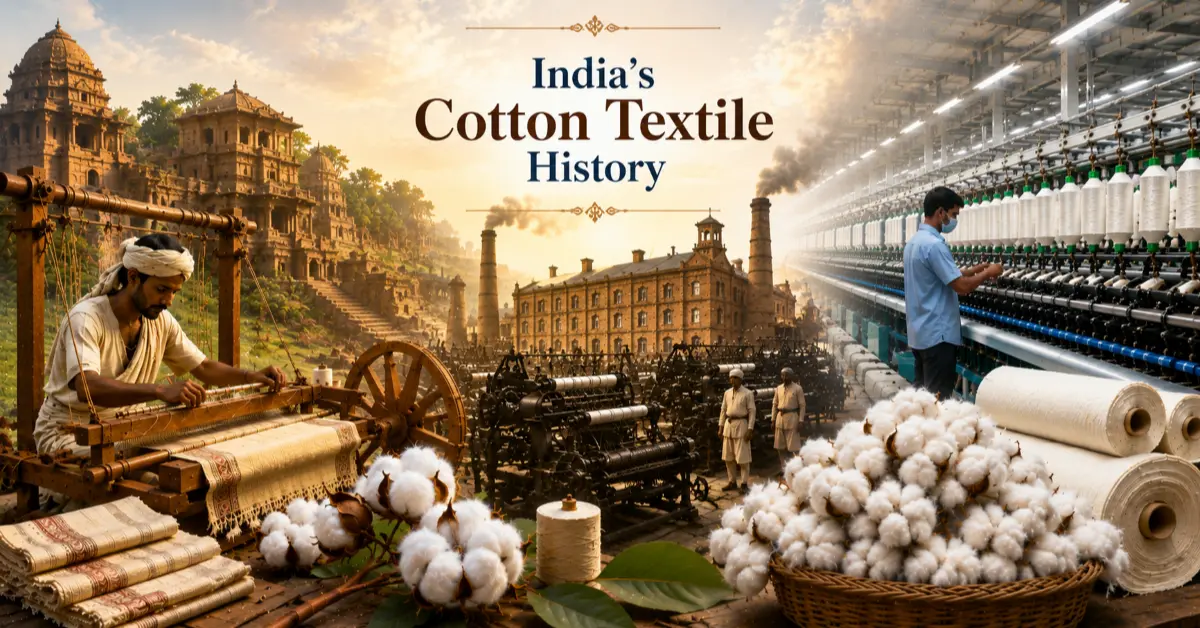
The history of cotton textile industry in India is one of the most interesting parts of India’s industrial and cultural journey. From ancient hand-woven fabrics to modern textile mills, India has played a major role in the global cotton textile industry for thousands of years.
But many people do not know how India became such a strong name in cotton production and textile manufacturing. The history of textile industry in India includes ancient trade routes, skilled artisans, British rule, and the rise of modern factories. Understanding the history of cotton industry in India helps us see how this sector shaped India’s economy and employment over time.
In this blog post by textiletrendshub.com, we will explore the complete history of cotton textile industry in India, from the Indus Valley Civilisation to today’s modern textile industry. If you want to learn more about the overall cotton industry, you can also read our detailed guide on the cotton textile industry in India.
History of Cotton Textile Industry in India in Ancient Times
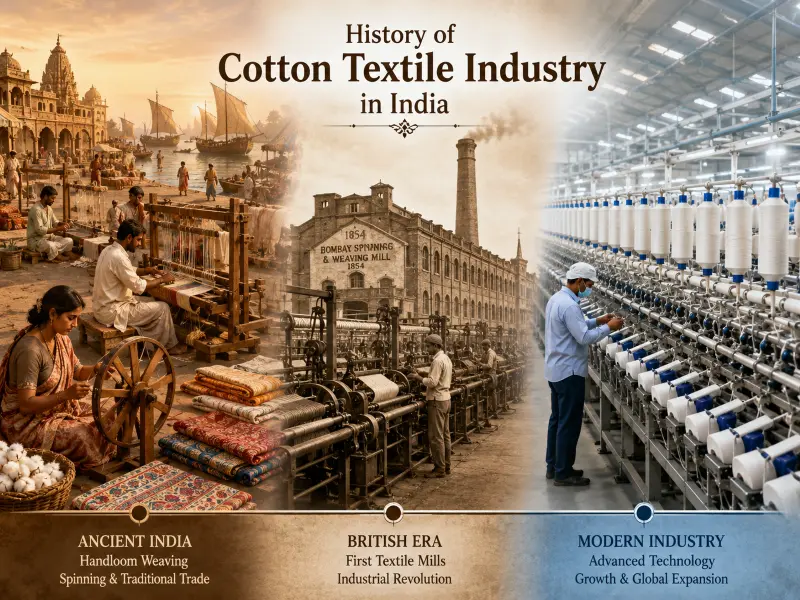
Long before modern textile mills existed, India was already known for producing fine cotton fabrics. The history of cotton textile industry in India started when ancient communities learned how to grow cotton and turn it into cloth using simple hand tools. The history of cotton in India proves that cotton weaving was an important part of daily life and trade in early Indian society.
Ancient Indian artisans were highly skilled in spinning and weaving techniques. Over time, the cotton and textile industry in India grew stronger as traders carried Indian cotton fabrics to different parts of Asia, Africa, and the Middle East. These trade connections helped Indian textiles gain worldwide recognition in ancient times.
Another important reason for this growth was the rising demand for handmade cotton cloth. The development of cotton manufacturing created jobs for many people and supported local economies. The history of cotton textile industry in India clearly shows how India became one of the earliest and most respected cotton-producing regions in the world. The rich history of cotton in India still influences the textile sector today.
Cotton Textiles During the Indus Valley Civilisation
One of the earliest chapters in the history of the cotton textile industry in India began during the Indus Valley Civilisation around 2500 BCE. Major cities, such as Harappa and Mohenjo-Daro, became important centres of trade, skilled crafts, and organised urban life. During archaeological excavations, experts found cotton cloth pieces, spinning tools, and weaving instruments, proving that early cotton manufacturing already existed in ancient India.
Another important fact is that the people of this civilisation had advanced knowledge of textile-making. They could spin cotton fibres into thread and weave them into fabric used for clothing and trade. These early weaving practices later became a strong base for the growing cotton textile industry in India.
Historical discoveries also show how valuable Indian cotton fabrics were in ancient times. The history of the textile industry in India explains that Indian textiles were known for their softness and fine quality in many trading regions. Overall, the history of the cotton textile industry in India highlights India’s deep connection with cotton weaving and textile craftsmanship from ancient times.
Growth of the Cotton Textile Industry in the Mughal Era
The Mughal era was an important turning point in the history of the cotton textile industry in India. During this period, Indian textiles gained worldwide popularity because of their fine quality, beautiful designs, and skilled craftsmanship. The support given by Mughal rulers helped the cotton textile industry expand across many regions of India.
During this time, India became famous for fine cotton fabrics like muslin, calico, and handwoven cloth. Cities such as Dhaka (which was part of undivided India during the Mughal era), Gujarat, and Ahmedabad were known for their beautiful textile products. Skilled artisans used traditional weaving methods to create soft and high-quality fabrics that were sold in India and exported to many foreign markets.
The strong export trade increased the demand for Indian cotton products in Europe, the Middle East, and Asia. This period also played an important role in the history of the cotton industry in India because Indian fabrics were considered among the best in the world.
The Mughal period greatly strengthened the cotton and textile industry in India, making India a global textile leader. Because of this growth, the history of the cotton textile industry in India remains closely connected with the success of the Mughal-era textile trade and craftsmanship.
British Rule and the Decline of Indian Textile Crafts
During the British era, India’s traditional textile sector faced major changes that affected millions of local weavers and craftsmen. The history of the cotton textile industry in India entered a difficult phase as British industrial policies began favouring factories in Britain over Indian handmade textile products.
However, the British government introduced industrial policies that mainly supported textile factories in Britain. Large amounts of cheap machine-made cloth were imported into India, which badly affected local weavers and small businesses. This period became an important phase in the history of the textile industry in India because many traditional handloom workers lost their income and jobs.
As machine production increased, the traditional cotton textile industry in India started facing serious challenges. At the same time, the British also encouraged modern mills, which slowly began changing the system of cotton manufacturing in the country. This industrial growth later helped the cotton textile industry become one of the largest industries in India today.
Even during these difficult years, the history of the cotton textile industry in India continued to evolve, and the modern cotton textile industry slowly started moving towards industrial growth. The history of the cotton textile industry in India during British rule remains an important chapter in India’s economic development.
First Textile Mill in India and Industrial Beginning
An important turning point in the history of the cotton textile industry in India came during the 19th century, when modern textile mills started operating in the country. This period marked the beginning of industrialisation in the Indian textile sector and changed the future of cotton manufacturing forever.
The first textile mill in India was the Bombay Spinning and Weaving Company, established in Mumbai in 1854 by Cowasji Nanabhai Davar. Many people searching for the history of the cotton textile industry in India often ask about the origin of textile mills because this event played a major role in India’s industrial growth. The company used modern machines for spinning and weaving cotton, helping India move from traditional handloom production to factory-based manufacturing.
After the success of the mill in Mumbai, many Indian businessmen started investing in the textile sector. The establishment of the first cloth mill in India encouraged rapid industrial growth and increased cotton production in different regions of the country.
During the following years, Mumbai became a major textile hub because of its port facilities, humid climate, and easy availability of raw cotton. Ahmedabad also developed quickly and later earned the title of the “Manchester of India” due to its strong textile production.
With the rise of more factories and spinning units, the first cotton textile industry in India expanded on a larger scale. Employment opportunities increased, exports improved, and this industrial phase became one of the most significant chapters in the history of the cotton textile industry in India.
Swadeshi Movement and Revival of Indian Textiles
The Swadeshi Movement became an important turning point in the history of the cotton textile industry in India. During British rule, many Indians started protesting against foreign goods and encouraged people to buy products made in India. This movement became stronger after the partition of Bengal in 1905 and played a major role in supporting the local cotton textile industry.
Leaders like Mahatma Gandhi promoted khadi and handwoven fabrics as symbols of self-reliance and national pride. People began boycotting British cloth and supporting Indian-owned textile mills. This helped local businesses and workers grow again after years of decline under British policies.
As a result, Indian textile production started gaining strength once again and created new opportunities for local industries. The history of the cotton industry in India clearly shows how the Swadeshi Movement encouraged economic independence and revived traditional textile practices. Because of this national movement, the history of the cotton textile industry in India entered a new phase of growth and self-reliance.
Post-Independence Growth and Modernisation
After independence in 1947, the history of the cotton textile industry in India entered a new phase of growth and development. The Indian government introduced several textile policies to support mills, improve exports, and create more jobs. New textile factories were established in different states, which helped the industry grow rapidly across the country.
With time, modern machines and advanced technology changed traditional cotton manufacturing methods. Automatic looms, better spinning machines, and improved production systems increased efficiency and fabric quality. These changes also helped the cotton and textile industry in India compete in international markets.
Today, India is one of the world’s largest producers and exporters of cotton textiles. This explains why the cotton textile industry is the largest industry in India. The modern textile sector supports millions of workers and plays an important role in the national economy. The history of the cotton textile industry in India continues to grow with innovation and global demand.
Conclusion
India has a long and proud connection with cotton production and textile making. The history of cotton textile industry in India shows how the country grew from ancient handloom weaving traditions to becoming one of the world’s leading textile producers. From the Indus Valley Civilisation and Mughal craftsmanship to modern factories and exports, the cotton textile industry has played a major role in India’s economy, trade, and employment.
Today, India is globally known for its strong textile manufacturing sector and rich cotton heritage. At textiletrendshub.com, we regularly share detailed insights about India’s textile sector. Read our complete guide on the cotton textile industry in India for detailed insights into production, major states, and future growth.

Q1. What is the history of cotton textile industry in India?
The history of cotton textile industry in India began thousands of years ago during the Indus Valley Civilisation, where people used cotton for clothing and trade. Over time, India became famous for its handwoven fabrics, skilled artisans, and strong textile trade during the Mughal era. Although British rule affected traditional weaving, the industry later grew again through modern textile mills and industrial development. Today, India is recognised as one of the world’s leading textile producers because of its strong cotton manufacturing sector and rich textile heritage.
Q2. Where was the first textile mill established in India?
The first textile mill in India was established in Mumbai in 1854. It was known as the Bombay Spinning and Weaving Company and was started by Cowasji Nanabhai Davar. This mill introduced machine-based textile production in India and became an important step in the country’s industrial growth.
Q3. Why is cotton textile industry the largest industry in India?
The cotton textile industry is considered one of the largest industries in India because it provides employment to millions of people and contributes greatly to the country’s economy. India also has suitable weather for cotton farming, easy availability of raw cotton, skilled workers, and a large domestic and international market for textile products.
Q4. How did the Swadeshi Movement help the Indian textile industry?
The Swadeshi Movement encouraged Indians to stop using foreign goods and support products made in India. During this movement, people started buying khadi and locally produced fabrics, which helped Indian textile mills and traditional weavers recover from the decline caused during British rule.
Q5. Why is India famous for cotton textiles?
India is famous for cotton textiles because of its rich weaving traditions, high-quality fabrics, and skilled craftsmanship. From ancient handloom weaving to modern textile factories, Indian cotton products have always been valued in global markets. The history of cotton textile industry in India also highlights how India became one of the world’s leading textile producers through continuous growth and innovation.


