


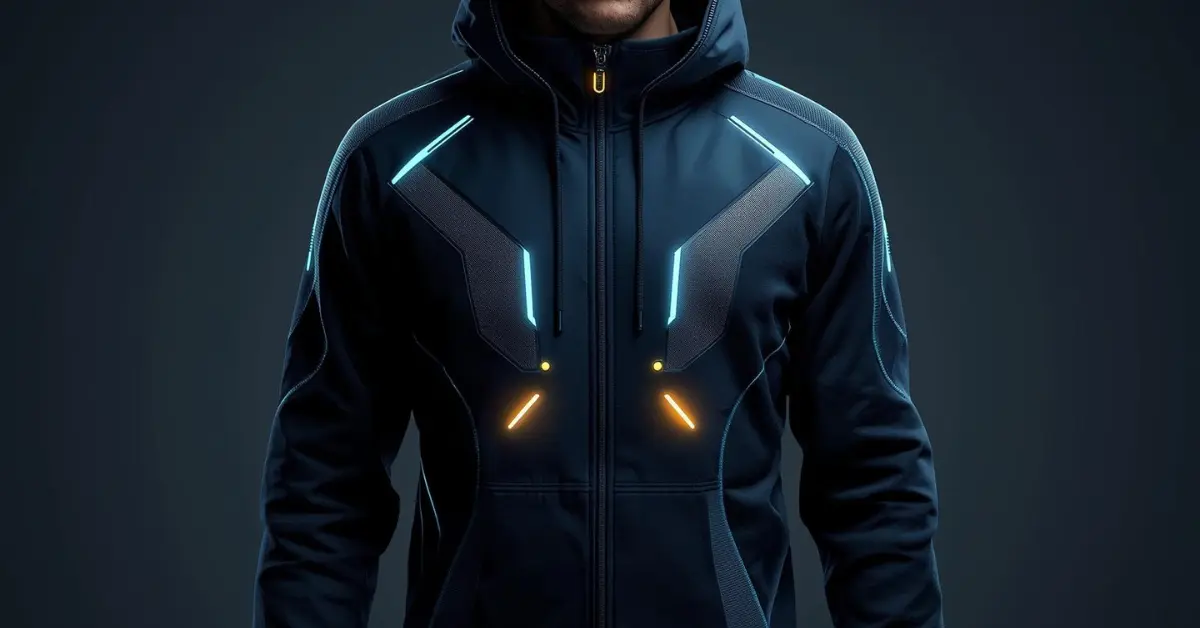
Introduction
Smart clothing is changing the way we think about everyday clothes. A shirt, jacket, or pair of sportswear can do more than simply cover the body. With the help of sensors, electronic components, and connected technology, some garments can collect information, respond to changes, and communicate with other devices.
Imagine wearing a shirt that can track your body movement during exercise. Or a garment that can collect information about body temperature and send it to a connected device. These ideas may sound futuristic, but they are already part of the growing world of smart clothes.
Unlike regular clothing, smart garments combine textiles with technology. They can use sensors, conductive materials, wireless connectivity, and small power sources to perform specific functions. These functions can be useful in areas such as fitness, sports, healthcare, safety, comfort, and fashion.
But what actually makes a piece of clothing “smart”? How does the technology work inside fabric without making the garment uncomfortable? And where can smart clothes be used in real life?
In this guide, we will explore what smart clothing is, how smart clothes work, the technology behind them, their examples, applications, benefits, challenges, and future possibilities.
If you want to understand the wider technology behind smart clothes, you can also explore our guide to Smart Textiles: The Future of Fashion, Healthcare & Innovation.
What Is Smart Clothing?
Smart clothing refers to garments that include technology to perform functions beyond the basic purpose of ordinary clothing.
A regular T-shirt, for example, is mainly designed to provide comfort and cover the body. A smart T-shirt may contain sensors or electronic components that can collect information about movement, body activity, temperature, or other conditions.
In simple words, smart clothes combine clothing and technology in the same wearable product.
Depending on its purpose, a smart garment may contain:
- Sensors that collect information
- Conductive threads that carry electrical signals
- Electronic components that process information
- Wireless connectivity such as Bluetooth
- Small batteries or power systems
- Connected apps or devices that receive collected data
These technologies can be integrated into the fabric or placed into different parts of the garment. The goal is to make the technology useful without turning the clothing into a bulky electronic device.
How Is Smart Clothes Different From Regular Clothing?
The biggest difference is functionality.
Regular clothing mainly focuses on things such as comfort, protection, appearance, and style. Smart apparel can perform these functions while also interacting with technology.
For example, a normal sports shirt can be designed to be lightweight and breathable. A smart sports shirt may also include sensors that collect information about movement or physical activity.
This gives smart garments an additional layer of functionality.
However, not every garment containing a small electronic feature should automatically be considered advanced smart clothing. The technology and its purpose can vary greatly from one product to another.
Some smart garments may focus on fitness tracking, while others may be designed for health monitoring, temperature management, safety, communication, or interactive fashion.
This makes these garments a broad and developing field rather than one single type of product.
What Can Smart Clothes Do?
The functions of smart clothes depend on the technology built into them.
Some garments can be designed to:
- Monitor movement or physical activity
- Collect selected body-related information
- Track fitness-related data
- Provide feedback through a connected device
- Respond to changes in temperature
- Communicate with smartphones or other devices
- Support healthcare monitoring
- Add interactive features to fashion
For example, a smart fitness garment may collect movement-related information and send it to a mobile application. Another garment may use sensors to monitor specific body signals.
This ability to sense, collect, and communicate information is what gives smart garments its unique role in wearable technology.
Smart clothing technology is also closely connected with the wider field of smart textiles, where textile materials are designed or enhanced to provide additional functions.
How Do Smart Garments Work?
Smart garments work by bringing several technologies together inside or around a garment. The exact system can be different for every product, but the basic process is relatively simple:
Sensors collect information → electronic components process it → connectivity transfers the data → the user receives or uses the information.
The clothing itself becomes part of the technology system.
1. Sensors Collect Information
Sensors are one of the most important parts of smart clothes.
They allow a garment to detect changes in the wearer’s body, movement, or surrounding environment.
Depending on the design, sensors can be used to detect things such as:
- Movement
- Pressure
- Body temperature
- Heart-related signals
- Posture
- Muscle activity
- Other physical changes
For example, a smart sports garment may use sensors to understand how the wearer is moving during exercise.
The sensor collects this information and passes the signal to the electronic system built into the garment.
This is one reason smart clothing is different from ordinary clothing. A normal garment simply moves with the wearer, while a smart garment can be designed to sense what is happening while it is being worn.
2. Electronic Components Process the Information
Collecting information is only the first step.
Once a sensor detects something, the signal needs to be processed so that it can become useful information.
Small electronic components inside the garment can help process these signals.
For example, a sensor may detect movement during exercise. The electronic system can then process that information before sending it to another connected device.
Designers have to make these components small, lightweight, and flexible enough for use in clothing.
This is important because a smart garment still needs to feel like clothing.
If the technology is too heavy, rigid, or uncomfortable, people may not want to wear it for long periods.
3. Connectivity Sends Information to Other Devices
Many smart garments can connect with smartphones, apps, or other electronic devices.
Technologies such as Bluetooth can allow information collected by the clothing to move to a connected device.
For example, a smart fitness garment may collect movement-related information and send it to a smartphone application where the user can view the data.
This connection can make smart clothing more useful because the garment does not always need to display or process everything by itself.
Instead, the clothing can act as a wearable data-collection system while another device handles the display or further analysis.
4. Conductive Materials Connect the Technology
The technology inside smart clothes also needs a way to move electrical signals between different components.
This is where conductive threads and textile-based conductive materials can become important.
Instead of relying only on traditional wires, some smart textile designs use conductive materials that can be integrated into fabric.
This helps create garments that are more flexible and better suited to movement.
5. Power Keeps the Smart Garment Running
Connected garments need energy to operate their electronic components.
Small batteries or other power systems can provide the energy required by sensors, connectivity, and other electronic functions.
But power is also one of the major design challenges.
A battery that is too large can make clothing uncomfortable. A battery that is too small may not provide enough power for long use.
Because of this, researchers and manufacturers continue to explore smaller, lighter, and more efficient power solutions for smart garments.
The ideal smart garment should provide useful technology while remaining comfortable, flexible, and practical for everyday use.
Key Technologies Used in Smart Clothing
Smart garments do not depend on one single technology. Different components work together to make a garment capable of sensing, processing, and sharing information.
The technology used can vary depending on the purpose of the garment. A fitness shirt may need movement sensors, while a healthcare garment may require different types of sensors and connectivity.
Here are some of the key technologies behind smart clothing.
Sensors
Sensors allow smart clothes to detect physical or environmental changes.
They can be designed to collect information related to movement, pressure, temperature, posture, or other physical signals.
For example, sensors in sportswear can help track body movement during exercise. In healthcare-related garments, sensors may be used to collect selected body measurements.
The sensor is often the starting point of these clothing systems because it allows the garment to detect what is happening.
Conductive Threads
Conductive threads are textile-based materials that can carry electrical signals.
They can be woven, stitched, or integrated into fabrics to connect different electronic components.
This is important because ordinary rigid wires are not always suitable for clothing. Textile-based conductive materials can help create a more flexible system that can move with the wearer.
As smart clothes develop, conductive materials are becoming an important part of electronic textile technology.
For a deeper look at this technology, read our guide to conductive textiles.
Wireless Connectivity
Smart clothing can also use wireless connectivity to communicate with smartphones, apps, or other devices.
For example, Bluetooth can allow information collected by a garment to be transferred to a connected device.
This can make the clothing more useful because users can view or analyse the collected information through an app instead of relying only on the garment itself.
Connectivity is especially useful in fitness, healthcare, sports, and other applications where collected data needs to be accessed outside the clothing.
Flexible Electronics
Traditional electronic components can be rigid, while clothing needs to bend, stretch, and move.
Flexible electronics are therefore important for making smart garments more comfortable and practical.
These components can be designed to work with textile materials while taking up less space and allowing greater flexibility.
The goal is simple: the wearer should be able to move normally without feeling like they are wearing a piece of electronic equipment.
Power and Battery Technology
All electronic systems need energy.
Smart garments may use small rechargeable batteries or other power solutions to operate sensors, connectivity systems, and electronic components.
However, batteries create an important challenge for these garments.
They need to be small enough to remain comfortable, powerful enough to support the required functions, and practical enough to recharge or maintain.
Better power solutions will be important if these garments is to become more common in everyday life.
Examples of Smart Clothing
These garments can take many different forms. Some garments are designed for sports and fitness, while others focus on healthcare, safety, comfort, or interactive fashion.
Smart Shirts
Smart shirts can include sensors that collect information about movement, physical activity, or selected body signals.
They can be useful for fitness tracking, sports training, research, and other applications where collecting information directly from clothing can be helpful.
The main advantage is that the technology becomes part of the garment instead of requiring the user to attach several separate devices to the body.
Smart Sportswear
Sportswear is one of the most promising areas for smart garments.
Smart sports garments can be designed to monitor movement, posture, activity, or other performance-related information.
For example, a smart garment may help a user understand how their body moves during training or exercise.
This type of clothing can be particularly useful for athletes and fitness users who want more information about their physical activity.
Smart Jackets
Smart jackets combine traditional outerwear with connected technology.
Depending on the design, they can include features related to communication, navigation, safety, temperature management, or other functions.
A smart jacket can therefore be more than just protection from weather. It can become a connected part of the user’s wearable technology system.
Healthcare Monitoring Garments
Smart clothing can also be designed for healthcare-related applications.
These garments may contain sensors that collect selected body-related information and send it to a connected device or monitoring system.
This can make certain types of monitoring more convenient because the technology can be integrated into clothing that the person is already wearing.
However, the capabilities of each product are different, and such clothing should not automatically be considered a replacement for professional medical equipment.
Temperature-Regulating Clothing
Another interesting area is clothing designed to help manage temperature and comfort.
Some advanced garments can use electronic or material-based technologies to respond to temperature conditions.
Such clothing could be useful for outdoor activities, sports, travel, work environments, or situations where maintaining comfortable body temperature is important.
Interactive Fashion
Smart clothing can also be used for creative and fashion-related purposes.
Designers can combine textiles with technology to create garments that respond to movement, touch, light, or other inputs.
This creates new possibilities where clothing is not only something people wear but also becomes an interactive part of their personal expression.
Applications of Smart Clothing
The uses of smart clothes extend far beyond fashion. As the technology develops, smart garments are being explored across health, sports, safety, comfort, and everyday life.
Fitness and Sports
Fitness and sports are major applications of smart clothing.
Smart garments can collect information about movement, activity, posture, or other performance-related factors.
For athletes, this information can help them understand their training and movement more closely.
For everyday fitness users, smart sportswear can potentially make exercise tracking more convenient by putting sensors directly into the clothing.
Healthcare
Smart clothing has important potential in healthcare and wellness.
Garments can be designed to collect selected body-related information and transfer it to connected systems.
This could support certain types of remote monitoring and make some forms of data collection more convenient for users and healthcare professionals.
The technology is especially interesting because clothing can potentially be worn for longer periods than some traditional monitoring equipment.
Everyday Wear
Smart clothing is also being explored for normal daily use.
Future garments may combine familiar clothing features with functions such as activity tracking, temperature management, connectivity, or safety.
The biggest challenge is making these features useful without making the clothing difficult to wear, wash, maintain, or recharge.
Workplace and Safety
Smart garments can have applications in workplaces where safety, movement, monitoring, or environmental conditions are important.
Specialised clothing could potentially provide information about movement or working conditions and help improve awareness in certain environments.
This can be particularly relevant for industries where workers spend long periods in physically demanding or changing conditions.
Fashion and Design
Technology is also creating new possibilities for fashion designers.
Smart clothing can combine textiles with electronic features to create garments that interact with movement, touch, light, or digital systems.
This creates a new connection between fashion, textile design, electronics, and creativity.
Instead of technology simply being added to clothing, future designs may make the technology a natural part of the garment itself.
Benefits of Smart Clothing
These garments combine the basic functions of clothing with technology. When designed well, this combination can provide benefits that ordinary garments cannot offer.
Better Data Collection
One major benefit of smart clothing is its ability to collect information while a person is wearing it.
Instead of using a separate device for every measurement, sensors can be integrated directly into the garment.
For example, smart sportswear may collect information about movement or activity during exercise.
This can make data collection more natural because the technology becomes part of something the user is already wearing.
Convenient Fitness Tracking
Smart clothing can make fitness tracking more convenient.
Garments designed with sensors may collect information about movement, posture, or physical activity while the wearer exercises.
For athletes and fitness users, this information can help them understand their activity and training more closely.
The main advantage is that the technology can work directly with the clothing instead of requiring multiple separate accessories.
Potential Healthcare Support
Smart garments can also have useful applications in healthcare and wellness.
Depending on the design, garments may collect selected body-related information and transfer it to a connected system.
This can make some forms of monitoring more convenient, particularly when a garment can be worn comfortably for longer periods.
However, the usefulness of smart clothing depends on the technology being used and the purpose for which the garment was designed.
Improved Comfort and Personalisation
Future smart garments may be able to respond to the user’s needs or surrounding conditions.
For example, clothing could potentially respond to changes in temperature or activity to improve comfort.
This could lead to more personalised clothing experiences where garments are not completely passive but can adapt to certain conditions.
New Possibilities for Fashion
Smart clothing also gives designers new ways to combine fashion and technology.
Garments can be designed to interact with movement, touch, light, or digital systems.
This can create clothing that is not only visually attractive but also functional and interactive.
As textile and electronic technologies improve, designers may find even more ways to make technology a natural part of clothing.
Useful Applications Across Different Industries
Smart clothing is not limited to one area.
Its potential applications include:
- Fitness and sports
- Healthcare and wellness
- Workplace safety
- Outdoor activities
- Everyday comfort
- Fashion and design
This wide range of applications makes this technology an interesting area of development within the textile and wearable technology industries.
Challenges of Smart Clothing
Although smart clothing offers many possibilities, it still has several challenges to overcome before it can become a normal part of everyone’s wardrobe.
The technology needs to work reliably while the garment remains comfortable, washable, durable, affordable, and easy to maintain.
Washability and Maintenance
One of the biggest challenges is washing.
Ordinary clothes can usually be washed without worrying about electronic components. Smart garments may contain sensors, conductive materials, batteries, or other components that need special protection.
If these components are not properly designed, repeated washing could affect their performance.
Manufacturers therefore need to find ways to make electronic clothing easier to clean and maintain.
Battery Life
Smart garments often needs power to operate sensors and electronic components.
This creates another challenge: battery life.
A battery that needs frequent charging can make a garment inconvenient for everyday use.
At the same time, a larger battery may add weight and reduce comfort.
Future smart clothing therefore needs power systems that are small, efficient, safe, and practical.
Comfort and Flexibility
Clothing needs to move with the body.
Rigid electronics, wires, or heavy components can make a garment uncomfortable or restrict movement.
For this reason, designers are working toward lighter and more flexible technologies that can work with textile materials.
The ideal smart garment should feel as close as possible to normal clothing while still providing its technological functions.
Cost
Smart clothing can be more expensive than ordinary clothing because it combines textile manufacturing with electronic technology.
Sensors, electronic components, specialised materials, and software can all increase production costs.
This can make some smart garments difficult for everyday consumers to afford.
As technology improves and production becomes more efficient, costs may become lower for some types of smart garments.
Durability
Clothing is exposed to repeated movement, stretching, washing, heat, sweat, and everyday wear.
Smart components need to survive these conditions without losing their performance.
This makes durability an important part of smart clothing design.
A garment may have impressive technology, but if the technology stops working after a short period of normal use, its practical value becomes limited.
Privacy and Data Security
Some smart garments can collect personal or body-related information.
When this information is transferred to smartphones, apps, or connected systems, privacy and data security become important considerations.
Users need to understand what information is collected, how it is stored, and who can access it.
As smart clothing becomes more connected, protecting user data will become just as important as improving the technology itself.
Recycling and Sustainability
This technology can also create a new sustainability challenge.
Traditional clothing already creates waste, but garments containing electronic components can be more difficult to repair, recycle, or dispose of.
Future designs will need to consider the complete life cycle of a smart garment—from manufacturing and use to repair, reuse, and recycling.
This is especially important as this technology grows.
Smart Clothing vs Wearable Electronics
Smart clothing and wearable electronics are closely related, but they are not exactly the same thing.
The simplest way to understand the difference is this:
Such clothing puts technology into garments, while wearable electronics is a broader category of electronic technology designed to be worn.
What Is Smart Clothing?
Smart clothing refers specifically to garments that include technology.
Examples can include:
- Smart shirts
- Sensor-based sportswear
- Connected jackets
- Health-monitoring garments
- Temperature-responsive clothing
The technology becomes part of the clothing itself.
What Is Wearable Electronics?
Wearable electronics is a broader field.
It includes electronic products and systems that are designed to be worn on the body.
Examples can include:
- Smartwatches
- Fitness trackers
- Smart glasses
- Wearable sensors
- Electronic accessories
- Smart clothing
This means this technology can be considered one part of the wider wearable electronics ecosystem.
Why Are They Connected?
Both fields aim to make technology easier to use by placing it close to the human body.
The difference is mainly where the technology is integrated.
A smartwatch is a wearable electronic device worn on the wrist.
A smart shirt, on the other hand, can have sensors and conductive materials built directly into the garment.
As technology develops, the boundary between clothing and wearable electronics may become less obvious.
For example, future products could combine smart fabrics, embedded sensors, wearable electronics, and connected software into a single system.
If you want to explore the wider technology behind this field, read our detailed guide to Wearable Electronics: Where Fashion Meets Technology and Innovation.
Smart Clothing vs E-Textiles
Smart clothing and e-textiles are closely connected, but they are not exactly the same thing.
Both combine textiles with technology, but they focus on different parts of the technology.
What Are E-Textiles?
E-textiles, short for electronic textiles, are textile materials that include electronic or electrically active functions.
They can use materials such as:
- Conductive fibres
- Conductive yarns
- Sensors
- Flexible electronic components
- Textile-based circuits
These technologies allow fabric to interact with electrical signals or electronic systems.
For example, conductive fibres can help carry electrical signals through fabric without relying only on traditional wires.
What Is Smart Clothing?
Smart clothing takes these technologies and integrates them into wearable garments.
A smart shirt, jacket, or pair of sportswear may use e-textile technologies along with sensors, batteries, connectivity, and software to provide a specific function.
So, in simple terms:
E-textiles → electronic technology integrated with textile materials
Smart clothing → garments that use smart or electronic technologies to provide additional functions
This means e-textiles can be one of the technologies used to create smart clothing, but not every e-textile product is necessarily a complete smart garment.
How Are They Connected?
The two fields support each other.
E-textile technologies can help make electronic systems more flexible and suitable for clothing. Such clothing can then use these technologies to create practical products for sports, healthcare, safety, fashion, and everyday use.
As these fields develop, the difference between textiles and electronics may become less noticeable.
For a deeper explanation, read our guide to E-Textiles: How Electronic Textiles Are Powering the Future of Smart Clothing.
What Is the Future of Smart Clothing?
The future of smart clothing will depend on one important question:
Can technology become useful without making clothing uncomfortable, complicated, or difficult to maintain?
Today, smart garments are still a developing area. Many technologies are being tested and improved, while manufacturers continue to work on problems such as battery life, comfort, durability, cost, and washability.
As these challenges are addressed, this technology could become more practical for everyday use.
More Flexible and Comfortable Technology
Future smart garments are likely to focus on making electronic components smaller, lighter, and more flexible.
Instead of feeling like electronic equipment, the technology could become almost invisible inside the garment.
This could make smart clothing more comfortable for long periods of use.
Better Sensors
Sensors are already an important part of smart clothing, but future sensors may become more accurate, smaller, and easier to integrate into fabrics.
This could allow garments to collect useful information without affecting the normal feel or appearance of the clothing.
Better sensors could support applications in areas such as fitness, sports, healthcare, workplace safety, and everyday wellness.
Smarter Connectivity
Connected clothing may increasingly communicate with smartphones, applications, and other wearable devices.
This could allow information collected by a garment to become part of a wider digital system.
For example, a person could potentially use one connected system to understand information collected from clothing and other wearable devices.
This could make wearable technology more integrated into everyday life.
AI and Personalised Clothing
Artificial intelligence could also play a role in the future of smart garments.
Instead of simply collecting information, future systems may be able to analyse data and provide more personalised feedback.
For example, smart sportswear could potentially identify patterns in movement and provide useful information about training.
However, the usefulness of AI will depend on the quality of the collected data and how responsibly that information is handled.
More Sustainable Smart Garments
Sustainability will also become increasingly important.
Smart clothing combines textiles with electronic components, which can make repair, reuse, and recycling more complicated than with ordinary garments.
Future designs may therefore focus on:
- Longer-lasting components
- Repairable garments
- More efficient electronics
- Lower-energy systems
- Recyclable or responsible materials
- Better end-of-life solutions
The aim should not simply be to make clothing smarter. It should also be to make this technology more durable and responsible.
More Practical Everyday Applications
The biggest change may come when smart clothing becomes genuinely useful in everyday situations.
Instead of technology being added just because it is possible, future garments may focus on solving real problems.
This could include clothing that helps with:
- Fitness tracking
- Temperature comfort
- Workplace safety
- Health-related monitoring
- Outdoor activities
- Personal convenience
- Interactive fashion
The future of smart clothing may therefore be less about making clothes look futuristic and more about making technology useful, comfortable, and almost invisible.
Conclusion
Smart clothing is bringing together two industries that were once very different: textiles and technology.
From sensor-based shirts and smart sportswear to healthcare garments and connected fashion, smart clothes can provide functions that go beyond what ordinary clothing can offer.
The technology behind these garments can include sensors, conductive materials, flexible electronics, wireless connectivity, and compact power systems. Together, these components allow clothing to collect information, communicate with other devices, and support different applications.
At the same time, such clothing still has important challenges. Battery life, washability, comfort, durability, cost, privacy, and recycling all need to improve before these garments can become common in everyday wardrobes.
The future, however, looks promising. As electronic components become smaller and textile technologies become more advanced, smart clothing could become more comfortable, useful, sustainable, and accessible.
Smart clothes may not replace ordinary clothes. Instead, it could add a new layer of functionality to the clothes we already wear.
For a broader understanding of the materials and technologies behind this industry, explore our complete guide to Smart Textiles: The Future of Fashion, Healthcare & Innovation.

Q1. What is smart clothing?
Smart clothing is clothing that includes technologies such as sensors, electronic components, conductive materials, or connectivity to perform functions beyond ordinary clothing.
Q2. How do smart clothes work?
Smart clothes use sensors and electronic components to collect and process information. Depending on the garment, the information can then be sent to a smartphone, app, or another connected device.
Q3. What Are Some Examples of Smart Clothes?
Examples include smart shirts, sensor-based sportswear, connected jackets, healthcare monitoring garments, temperature-regulating clothing, and interactive fashion garments.
Q4. What technology is used in these garments?
Common technologies include sensors, conductive threads, wireless connectivity, flexible electronics, and power or battery systems. Together, these components allow garments to perform functions beyond traditional clothing.
Q5. What are the benefits of smart clothes?
They can support fitness tracking, data collection, healthcare monitoring, comfort, personalisation, and new applications in fashion, sports, and other industries.
Q6. What challenges do these garments face?
Common challenges include battery life, washability, comfort, durability, cost, privacy, data security, and recycling.
Q7. How are smart garments different from wearable electronics?
Smart garments integrate technology directly into clothing or textiles, while wearable electronics can include devices such as watches, bands, or other electronic accessories worn on the body.
Q8. What is the future of smart clothing?
The future may bring more flexible technology, better sensors, improved connectivity, AI-powered personalisation, sustainable materials, and more practical applications for everyday wear, healthcare, fitness, and fashion.


